Historical Fiction Books and Novels | Best Reads
The Timeless Appeal: A Comprehensive Guide to Historical Fiction
What Are Historical Fiction Books?
At its core, historical fiction can be defined as a literary genre where the setting is in the past. While the backdrop, the politics, the fashion, the social norms, and the major events are grounded in the reality of a specific period, the characters and the plot are products of the author's imagination.
The relationship between fiction and history is a delicate dance. A skilled author uses historical research to create an authentic atmosphere, recreating the sights and sounds of a bygone era. However, the narrative arc remains fictional. This is the primary distinction between historical fiction and straight history. Where a history textbook seeks to provide a factual, objective account of what happened and why, a historical novel seeks to capture the emotional truth of what it felt like to be there.
For instance, historical fiction doesn’t just tell you about the American Revolution; it puts you in the shoes of a tailor hiding a rebel in his cellar. It doesn’t just list the inventions of the Industrial Age; it shows you the soot on a child’s face in a textile mill. By layering imagination over the framework of the past, authors allow readers to experience history not as a distant study but as a lived experience.
Historical Fiction Novels vs. Other History Genres
Distinguishing between historical fiction novels and other history-related categories can sometimes feel tricky, as genres often overlap. To truly understand what you are reading, it helps to identify these boundaries:
Period Fiction Books
Often used interchangeably with historical fiction, period fiction typically focuses more on the manners, customs, and social intricacies of a time. While historical fiction often tackles "Big History" (wars, political upheaval), period fiction might focus intently on the domestic lives of the aristocracy or the working class in a very specific, contained setting.
Contemporary Fiction
This genre is set in the "now." It deals with the current cultural climate, modern technologies, and the anxieties of the present. While historical fiction looks backward to understand the present, contemporary fiction captures the pulse of the current moment.
Historical Non-Fiction
This is the realm of biographies, memoirs, and academic histories. These historical books are strictly bound by evidence. While an author of non-fiction might use storytelling techniques, they cannot invent dialogue or scenes that weren't recorded.
Essentially, if you want to know the "truth" or facts of an event or time, read non-fiction; if you want to feel its "soul,” pick up a historical novel.
The Different Subgenres in Historical Fiction
Because the human experience is so vast, historical fiction has branched out into many exciting subgenres:
- Historical Romance: Focuses on a central love story set against a historical backdrop, where the social conventions of the era often provide the conflict.
- Historical Mystery: Whodunits placed in the past, where the detective must navigate the forensics and social constraints of a different time.
- Alternate History: Asks the "what if" question. What if the Roman Empire never fell? What if the outcome of a major war had been reversed?
- Historical Fantasy: Blends realistic history with elements of magic or the supernatural, often incorporating folklore into historical events.
- Historical Adventure: High-stakes narratives involving exploration, war, or naval battles.
- Historical Thriller: Paced like a modern thriller but set in the past, often involving spies, assassins, or political conspiracies.
- Young Adult (YA) Historical Fiction: Often follows characters as they grow up during defining moments in history, exploring the universal themes of identity and rebellion, as teenagers must find their way through a world that is rapidly changing.
- Biographical Historical Fiction: Provides a fictionalized account of the life of a real historical figure, filling in the gaps of their private life with imagined scenes.
Historical fiction subgenres can be divided further into specific regions, events, and eras as well, providing an extremely broad range of possible storylines and settings within the genre as a whole.
Best Historical Fiction Books to Read
Finding the best historical fiction books is a journey of discovery. Here are a few must-read titles that are considered the gold standard:
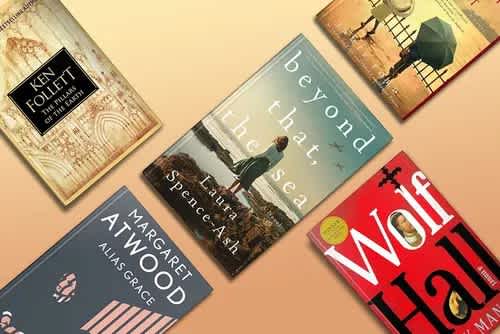
- Wolf Hall by Hilary Mantel: A masterpiece that breathes life into Thomas Cromwell’s rise in the court of Henry VIII. It’s a brilliant study of power and pragmatism.
- All the Light We Cannot See by Anthony Doerr: Set during WWII, this beautifully written novel tracks the converging lives of a blind French girl and a German orphan.
- The Nightingale by Kristin Hannah: A heart-wrenching tale of two sisters in Nazi-occupied France, showcasing the resilience of the human spirit.
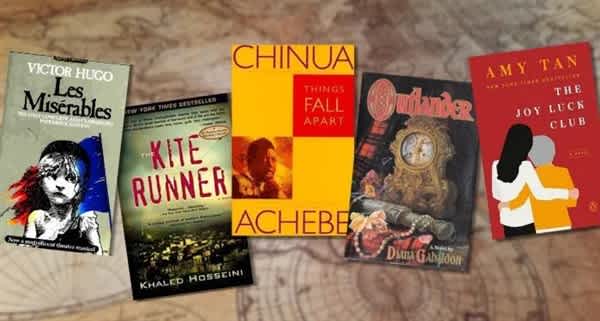
- Things Fall Apart by Chinua Achebe: A seminal work that depicts pre-colonial life in Nigeria and the subsequent arrival of Europeans, shifting the lens of history to an African perspective.
A Few Examples of Top Historical Fiction Novels by Era
To help you navigate these historical novels, it is helpful to categorize them by the time period they inhabit:
- Ancient History: Circe by Madeline Miller (Ancient Greece). A lyrical reimagining of the life of a minor goddess.
- Medieval: The Name of the Rose by Umberto Eco. A brilliant, philosophical murder mystery set in a 14th-century Italian monastery.
- Victorian/19th Century: Alias Grace by Margaret Atwood. A psychological examination of a real-life Victorian murderess.
- 20th Century: The Great Alone by Kristin Hannah. A raw, powerful story set in the rugged landscape of 1970s Alaska.
Historical Fiction All-Time Bestsellers
Historical fiction often tops the best-sellers list because they tap into themes that are timeless. Readers flock to these stories because the human emotions of love, jealousy, fear, and ambition remain essentially the same throughout the centuries. Here are a few of the all-time best-sellers. You probably recognize some of them:
- A Tale of Two Cities by Charles Dickens, which has sold an estimated 200 million copies, explores the French Revolution.
- The Pillars of the Earth by Ken Follett is another top seller with 175 million copies sold, chronicling the construction of a Gothic cathedral in 12th-century England.
- Les Misérables by Victor Hugo, with over 100 million copies, focuses on redemption amidst 19th-century French inequality.
- Outlander by Diana Gabaldon has sold 50 million copies, combining time travel with 18th-century Scottish romance.
- Gone with the Wind by Margaret Mitchell has sold 30 million copies, following Scarlett O’Hara through the American Civil War.
These titles are widely recognized as among the best historical fiction of all time because they offer a perfect balance: they are meticulously researched, deeply empathetic, and impossible to put down.
How to Choose the Right Historical Fiction Book
Choosing the best books for historical fiction starts with your personal curiosity. Ask yourself these three questions:
- What era am I curious about? Are you fascinated by the Tudors? The Cold War? The Wild West? Start there.
- What is my preferred writing style? If you love rich, descriptive prose, look for literary historical fiction. If you prefer action, look for historical adventures or thrillers.
- What is my reading goal? Are you looking to learn, or are you looking to escape? If you want to learn, look for biographical historical fiction. If you want to escape, look for historical fantasy or romance.
Ultimately, the best historical fiction reads are those that manage to make the reader feel like a time traveler. Whether you are walking the cobbled streets of 18th-century London or navigating the trenches of the Great War, these books offer a bridge to the past that is not only informative but profoundly moving.
This Week's Historical Fiction Best Sellers on Amazon
As of June 30th, 2026
General Historical Fiction - The Calamity Club by Kathryn Stockett
Historical Romance: The Resistance Daughter by Joanne Kormylo
Historical Mystery: The Secret Book Society by Madeline Martin
Alternate History: The Deep Pacific: Book 3 of the American War by Brian C. Thompson
Historical Fantasy: The Will of the Many: Hierarchy, Book 1 by James Islington
Historical US: Demon Copperhead by Barbara Kingsolver
Historical Thriller: The Spin: A psychological thriller by Faith Gardner
Young Adult (YA) Historical Fiction: The Book Thief by Markus Zusak
Biographical Historical Fiction: A Pair of Aces by Marie Benedict
Historical Fiction of the American Frontier: The Greenhorn 2 by John Deacon
Historical Fiction by Will Colt
Where Rivers Run West - A historical fiction novel set in the silver boom of Colorado, in which the harsh reality of the West transforms sixteen-year-old Rory Fraser into a stalwart frontiersman.
The Arrow and the Setting Sun - A biographical historical fiction novel depicting the life of Chief Ouray of the Ute Nation. Included among the short list titles for the Historical Novel Society’s First Chapters Competition, The Arrow and the Setting Sun is told from the viewpoint of Ouray’s wife, Chipeta, capturing the emotional struggle involved with leading the Tabeguache Ute in a time of Westward expansion.
The Western As Historical Fiction
Western novels are a vital subgenre of historical fiction, primarily set on the 19th-century American frontier. A historical western seeks to reconstruct a specific era, capturing the cultural, political, and social nuances of westward expansion. These historical western novels often weave fictional narratives around real events, such as the California Gold Rush, the construction of the Transcontinental Railroad, or the aftermath of the Civil War. By placing invented characters within these documented timelines, authors ground their stories in authenticity while exploring the complexities of survival and morality.
The literary western often elevates the genre by focusing on deep character studies and prose that reflects the harsh beauty of the landscape. For instance, many historical Western books use real-life figures or milestones to drive their plots. Larry McMurtry’s Lonesome Dove utilizes the historical context of late-nineteenth-century cattle drives, while Philipp Meyer’s The Son spans generations to trace the rise of the Texas oil industry. Other notable examples include News of the World by Paulette Jiles and Cold Mountain by Charles Frazier. Through this blend of factual milestones and creative storytelling, these novels transform dusty archives into immersive, living legends.
Louis L’Amour as a Western Historical Fiction Icon
Louis L’Amour is widely regarded as the titan of the American Western, masterfully infusing his narratives with meticulous historical detail and authentic frontier atmosphere. Rather than relying solely on pulp tropes, L’Amour conducted extensive research into the geography, survival skills, and ancestral histories of the pioneers, grounding his fast-paced adventures in a tangible reality. His prose often captures the harsh beauty of the landscape and the moral complexities faced by those carving a life out of the untamed West. Iconic works such as Sackett’s Land, Hondo, The Lonesome Gods, To the Far Blue Mountains and Last of the Breed are just a few of the titles that showcase his commitment to portraying the heritage of the American experience. His ability to weave genealogical depth and historical accuracy into his storytelling cemented his legacy as a writer who transformed the Western from mere entertainment into a venerated form of American historical fiction.
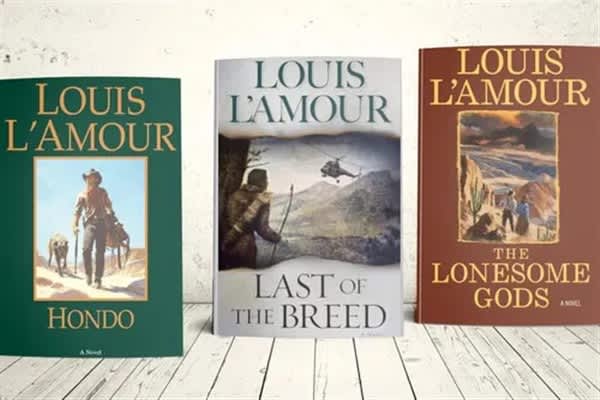
Other authors who utilize a historical fiction approach to the Western genre:
Larry McMurtry ( Lonesome Dove)
Owen Wister (The Virginian)
Elmer Kelton (The Time It Never Rained)
Paulette Jiles (News of the World)
A.B. Guthrie Jr. (The Big Sky)
Zane Grey (Riders of the Purple Sage)
Willa Cather (O Pioneers!)
My Commitment to Historical Fiction in My Westerns
I am a lover of History, especially Western History; consequently, I am committed to the historical fiction element being an integral part of my Western novels. My MacLean Brothers series explores the lives of seven brothers and a sister as they leave a Virginia tobacco plantation to migrate West after the War Between the States. Along the way, I try to answer questions like:
- What motivates them?
- What do they discover in the West?
- How do they change?
- What strengths do they draw on to adapt and thrive?
- What do they become?
Books in the MacLean Brothers Series
1. The Cavalier - Noah MacLean, a Pinkerton Detective, moves West working a case. A gritty veteran of Mosby’s Raiders, his sense of duty drives him to do what’s right. He winds up as the sheriff of Calaveras County in California.
2. Lonestar Ranger - Daniel MacLean becomes a Texas Ranger, desiring to bring the man whose bullet killed his wife in a gunfight in Seguin, but finds himself in a land war between a land baron and the Mexican land owners who have worked the land for centuries.
3. Prescott - Zeke MacLean is appointed to Fort Whipple in Arizona to assist with the uprising of the Apache and Yavapai. He discovers that someone is raiding local settlements and making it look like the work of the native people. He ends up as the first sheriff of Yavapai County.
4. Big Sky Marshal - David MacLean heads West with the dream of being part of a cattle drive. Along the way, he discovers that he has a deep sense of law and order as well as a desire to maintain it, driving him to his destiny as a town marshal in Montana.
5. Solomon’s Hand - Unlike his other brothers, Solomon MacLean is reckless and willing to walk the fine line of the law. He is charming at a card table and ruthless with a pistol in his hand.
Will Colt Westerns: Stories where integrity survives in a harsh land.